The ultra Project | Week 5 to 19
Becoming the athlete
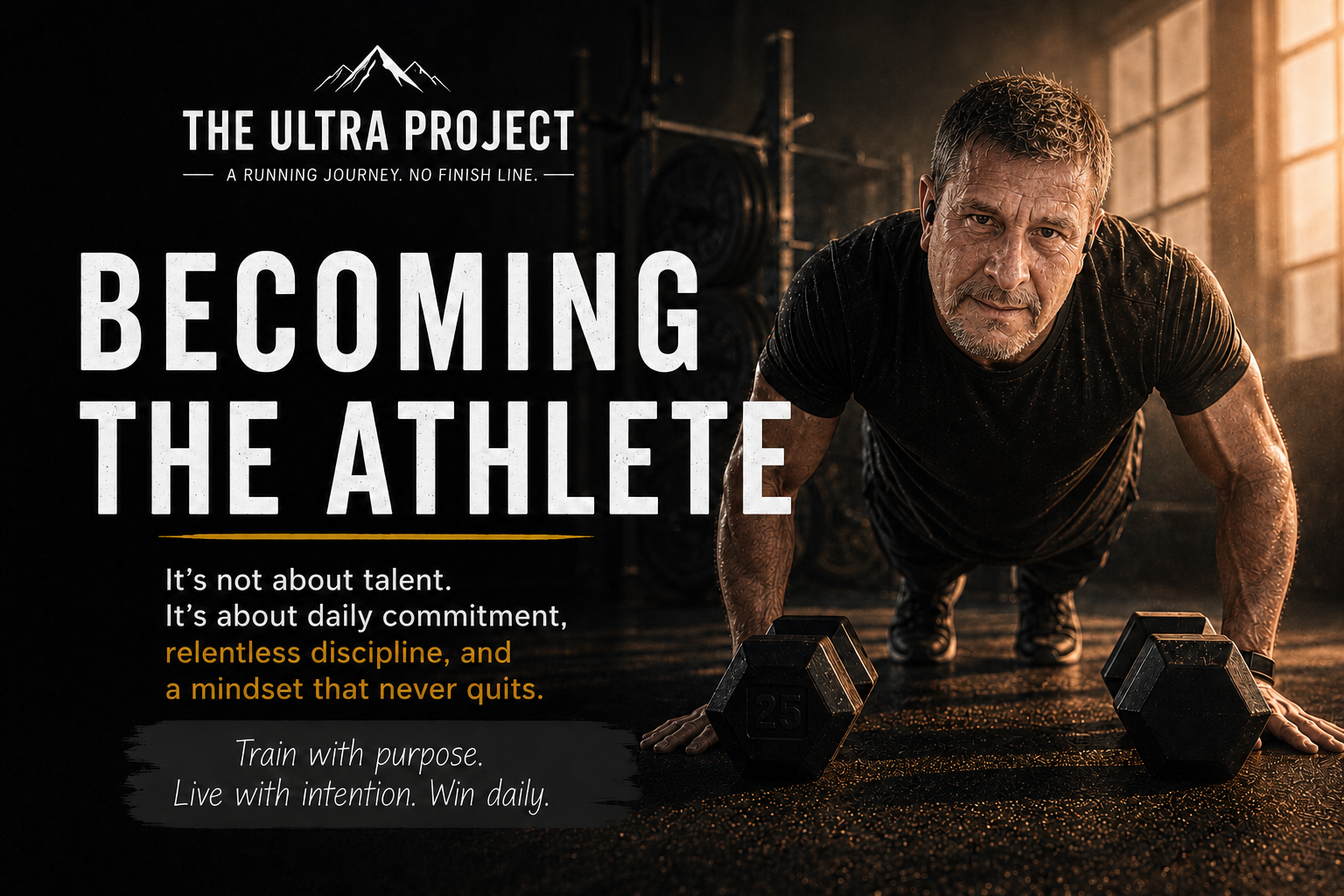
The Hiccup, The Falter, The Guilt, The Reset
Some weeks in an ultra‑running journey feel clean, sharp, and disciplined. Weeks 5 to 19 was not one of them. It was the hiccup, the stutter in the engine, the moment the compass spun and pointed somewhere unhelpful. A falter. A dip. A reminder that progress isn’t linear, and that even the most committed missions encounter turbulence.
Over the couple of months, exercise has happened, but not with the intensity, structure, or intent that usually defines my training. Work has expanded, study has demanded attention, and both have been poorly prioritised. I began this academic year with a clear plan: things will change. By Week 2, that plan was already slipping through my fingers.
But this is not a failure. This is a reset.
Deep breaths. Re‑centre. Re‑prioritise.
Last Year’s Order of Life
Work
Family & Friends
Everything else (including fitness)
Study
It worked… until it didn’t. Work dominated. Study squeezed into the margins. Fitness became optional. And although life continued, it didn’t progress in the direction I wanted.
This year, the hierarchy changes; deliberately, unapologetically, and with purpose.
This ACEDemic Year’s Priorities
1. Health & Fitness
Because without health, nothing else stands. Because the 50‑mile race across Wales isn’t just an event, it’s a declaration of who I am becoming. Because longevity, strength, and resilience don’t happen accidentally. Because my body is the vehicle that carries every ambition, every responsibility, every relationship, every challenge. Because I want to live past 100, and that doesn’t happen by chance. Because when fitness is right, everything else becomes easier to carry.
2. Study — Final Year of the Degree
This is the last push. The final ascent. The year where discipline outweighs motivation, and where the work I do now shapes the opportunities I’ll have later. It deserves priority, not leftovers. Family & Friends
Because they are the constant. Because they anchor me when work becomes chaotic and study becomes heavy. Because relationships are not maintained by accident, they require presence, time, and attention. Because the people in my life matter more than the tasks in my inbox.
4. Work
Because I go to work to live, not live to work. Because productivity is not the same as purpose. Because boundaries are not weaknesses, they are strategy. Work remains important, but it no longer gets the first slice of me.
5. Everything Else
The noise. The optional. The distractions. They can wait.
The Reset
Week 5 to 19 wasn’t pretty. It wasn’t polished. It wasn’t the heroic montage of training clips and early‑morning discipline. It was messy.
But resets are powerful.
A reset is a line in the sand. A reset is a recommitment. A reset is the moment the mission becomes clear again.
The Ultra Project continues, not because it’s easy, but because it’s important. And Week 5 to 19, with all its hiccups and guilt, might just be the weeks that strengthens the resolve for everything that comes next.

The Honest Bits
I am inspired by my athletic friends, more than they probably realise. Some I know personally. Some I only know through the small windows of social media. But all of them, in their own way, push me forward.
I watch their training. I watch their discipline. I watch the way they keep showing up, even when life throws the usual chaos at them.
I see their disappointment when things don’t go to plan, the missed PB, the bad race, the injury, the fatigue, the days where motivation simply doesn’t arrive. They share those moments openly, and there’s something powerful in that honesty. It reminds me that even the strongest people stumble.
But I also see their joy.
The finish‑line photos. The medals. The sunrise runs. The proud smiles after conquering the next big event. The quiet posts where they say, “I didn’t think I could do this… but I did.”
Those moments inspire me beyond words.
They remind me that progress isn’t loud. It isn’t glamorous. It isn’t always easy.
It’s built in the small decisions, the early alarms, the cold mornings, the miles nobody sees, the days where you choose effort over comfort.
Their journeys make me question my own limits. They make me want to be better. They make me want to keep moving forward, even when I falter.
And maybe that’s the honest bit:
I’m not doing this alone. I’m carried forward by the people who show me what’s possible. Their grit becomes my motivation. Their joy becomes my fuel. Their setbacks become my lessons.
They inspire me in ways I can’t fully articulate, but I feel it every time I lace up my shoes.
And I’m grateful for every single one of them.
Diet
This part still stands, and it stands even stronger now:
Diet is probably the easiest area to improve.
Not because it’s effortless, but because it’s one of the few areas where the variables are almost entirely in my control. And if I’m honest, my current eating pattern isn’t helping me move toward the Wales 50, it’s holding me back.
Right now, I get free lunches at work. Then I eat a big meal in the evening. Breakfast is hit‑and‑miss, and with a 4am rise, that means by 8am I’m hungry. For most people, that’s lunchtime. For me, it’s the point where my body is already asking for fuel.
And then there’s the vending machine.
The vending machine is not my friend. It does me no favours. It’s convenience disguised as comfort, and it derails me more than it supports me.
I need to stop relying on it. I need to stop pretending it’s harmless. I need to stop letting it fill the gaps created by poor planning.
The truth is simple:
Less processed food. More informed choices. More preparation. More intention.
I’ve started thinking of my body as a human computer:
Data in = Data out.
Good nutrition in. Better energy, recovery and stamina out.
The equation is brutally honest, and brutally fair.
But here’s the real honest bit:
I need to look properly at my eating pattern. Not vaguely. Not “I’ll try harder.” But with actual structure.
And the good news? I follow enough food socials to work through recipes. I like cooking. I enjoy the process. I just haven’t been using that skill intentionally.
So I’m going to start making my own weekly treats, healthier snacks, planned fuel, things I actually enjoy eating that don’t sabotage my training. If I can prepare food for myself. If I can follow a recipe for fun, I can follow one for performance.
This isn’t about perfection. It’s about respect, respecting the machine I’m asking so much from.
Better nutrition. Better fuel. Better outcomes.
It’s simple. It’s logical. And it’s time I apply it with consistency.
The reset includes this too.
Training
Training doesn’t need to be perfect. It doesn’t need to be impressive. It doesn’t need big miles, big numbers or big statements.
It just needs to be consistent.
The truth is simple: I don’t need to run far. I don’t need to run fast. I just need to get out there.
Show up. Step outside. Move. Even if it’s ten minutes. Even if it’s a short loop. Even if it’s nothing worth posting online.
Consistency builds the engine. Consistency builds the resilience. Consistency builds the version of me who will stand on the start line of the Wales 50.
The miles will come. The fitness will come. The confidence will come.
But only if I keep showing up.
No drama. No excuses. Just bloody get out there.
Mental Wellness
Mental wellness isn’t a luxury. It’s not something to squeeze in when everything else is done. It’s the foundation that holds everything together.
And this week reminded me of something simple:
I work to live. I do not live to work.
When work creeps into every corner of life, everything else suffers, sleep, stress, digestion, training, focus, even the ability to enjoy the small things. My diverticulitis flare‑ups are proof enough. Stress isn’t just a feeling; it’s a physical consequence.
I need clearer boundaries. I need to leave work at work. I need to stop carrying other people’s noise home with me.
Because my health deserves better. My goals deserve better. My life deserves better.
Mental wellness, for me, means choosing peace over pressure. It means reading instead of doom‑scrolling. It means walking, breathing, noticing. It means remembering that my job is part of my life, not the centre of it.
Work supports the life I want. It should never replace it.
And that’s the honest bit.
Looking Forward
My trip to Narrowboat Mandarin is now just a week away, and honestly, it couldn’t be better timed. I need it. Not as a holiday, but as a reset , a deliberate step away from noise, meetings, screens, and the constant pull of work.
It’s time for a work detox. Time to leave the inbox behind. Time to stop carrying other people’s urgency around like it’s mine.
The plan is simple:
Lots of study. Lots of running. Lots of walking in nature. A full diet reset.
Mandarin has always been a place where things slow down. The pace changes. The mind clears. The world feels bigger and quieter at the same time. It’s the perfect environment to get back to the basics, movement, focus, good food, fresh air, and uninterrupted thought.
This holiday week isn’t just a break. It’s preparation. It’s alignment. It’s the next step in the reset I’ve already started.
And I’m ready for it.

Lesson of the Week
The Cost of Running on Empty
This week delivered a simple but sharp lesson: you cannot outrun poor prioritisation.
I moved from meeting to meeting, most of them non‑value‑add, the kind that drain time without returning anything useful. My fluid intake was terrible, to the point that halfway through Wednesday’s run my body sent a very clear message: cramp. Not a mystery. Not bad luck. Just the inevitable outcome of neglecting the basics.
Today is rest. Tomorrow is the reset.
Next week’s diary pages have already been stripped of non‑essential appointments , a deliberate clearing of the runway so I can take off properly again.
What This Week Taught Me
1. Meetings are not work
Activity is not productivity. Movement is not progress. A calendar full of noise is just that, noise. If it doesn’t add value, it steals value.
2. Hydration is not optional
Fluid intake is one of the simplest performance multipliers, yet the easiest to overlook. This week proved that neglecting it has immediate consequences. Cramp is just the body’s way of saying: you didn’t give me what I needed.
3. Fatigue isn’t always physical
Running on low hydration, low focus, and high distraction creates a kind of cognitive fatigue that bleeds into training, study, and decision‑making. The fix isn’t heroic effort, it’s better structure.
4. Resetting is a skill
Not a failure. Not a collapse. A skill. The ability to stop, breathe, wipe the slate, and start again with intention is one of the most powerful tools in long‑term endurance training and long‑term life management.
5. Protecting next week starts now
By clearing your diary of non‑essential appointments, you’ve already taken control of the next seven days. This is how momentum is built: not by chance, but by design.
The Mission Brief for Next Week
Hydration becomes non‑negotiable.
Training intensity returns gradually but deliberately.
Study gets protected time.
Work gets boundaries.
Meetings get filtered ruthlessly.
Recovery is scheduled, not accidental.
Week 19 wasn’t perfect, but it was instructive. Sometimes the lesson arrives disguised as cramp, fatigue, and frustration. You listened. You adjusted. You reset.
That’s how an ultra is built.
Barry Goes Ultra
Made with Squarespace
Location
Dorchester,
Dorset. UK
Contact
barry@barrygoesultra.uk
