The ultra Project | Week 4
Building Momentum
The previous few weeks have started to provide an answer. Not through dramatic breakthroughs or remarkable performances, but through something far more valuable: evidence. Evidence that the alarm can ring at 4am and be answered. Evidence that training can happen alongside work, study, and the countless distractions of everyday life. Evidence that progress is still possible.
Momentum is an interesting thing. It doesn't arrive suddenly. It builds quietly, often unnoticed at first. One run leads to another. One good decision makes the next slightly easier. Distances that once demanded effort begin to feel routine. The body adapts, but so does the mind.
What makes momentum powerful is that it changes the conversation. The question is no longer whether you can train. The question becomes how far you can go if you keep doing it.
That doesn't mean every day feels easier. There will still be missed sessions, tired mornings, and moments when enthusiasm is nowhere to be found. Life has a habit of interrupting even the best-laid plans. The difference now is that a missed day feels like a pause rather than a setback. The direction of travel remains the same.
This stage of the rebuild is about carrying forward what has already been earned. Protecting the small habits that are beginning to take root. Adding a little more distance, a little more confidence, and a little more belief with each passing week.
Because momentum isn't built by one exceptional effort.
It's built by ordinary efforts repeated often enough that they become part of who you are.
The miles are starting to accumulate. The fitness bank is growing. The horizon remains distant, but for the first time it feels closer than it did before.
The rebuild is no longer about getting started.
It's about keeping the wheel turning.
And every turn makes the next one easier.
This Week's Training
Monday
Monday was meant to be strength training.
My nemesis.
Running has always come more naturally. There's something simple about putting on a pair of trainers and heading out the door. Strength work, on the other hand, has always felt like the thing that sits stubbornly on the to-do list, waiting patiently while I find reasons to do anything else first.
The day started early, as most of them seem to now. Coffee in hand, I was already mentally working through the week's priorities before the sun had properly made an appearance. Work was busy, full of the usual mix of deadlines, shifting requirements, and emails that somehow multiply when you're not looking.
Throughout the day, I knew the strength session was waiting for me.
Not looming over me exactly, but quietly present in the background. Like a conversation you've been meaning to have for a long time.
One of the things I've learned during this rebuild is that weaknesses rarely disappear by themselves. You can avoid them for a while. You can work around them. You can convince yourself that the enjoyable parts of training are enough. But eventually, you have to face the things that hold you back.
For me, that's strength training.
Not because I don't understand its value. Every coach, athlete, and article says the same thing. Stronger muscles improve resilience, reduce injury risk, and provide the foundations needed for bigger training loads. I know all of that.
The challenge isn't knowledge.
The challenge is doing it consistently.
By the time the evening arrived, I could feel the familiar temptation to postpone it. Tomorrow would be easier. Tomorrow would be more convenient. Tomorrow would somehow be different.
But momentum doesn't care about convenience.
So the session got done.
It wasn't spectacular. There were no personal bests, no moments of revelation, and certainly no sudden transformation into someone who loves squats and lunges. It was simply a case of showing up and doing the work.
And perhaps that's the point.
Every rebuild has its weak points. Every athlete has an area they would rather avoid. Progress often hides behind the tasks we're least excited about doing.
The funny thing is, I can feel it starting to click.
Not because I suddenly enjoy strength training, but because I'm beginning to accept that it is part of the process rather than an obstacle to it.
Maybe that's what momentum really looks like.
Not loving every session.
Just no longer arguing with yourself before doing it.
Tuesday
Tuesday began with a familiar negotiation.
The alarm went off early, and before my feet had even touched the floor, the internal excuses had already started their daily briefing. It would be easy to leave today's training for later. Work was busy. The calendar was full. There would be another opportunity this evening.
Experience has taught me that "later" is often where good intentions go to die.
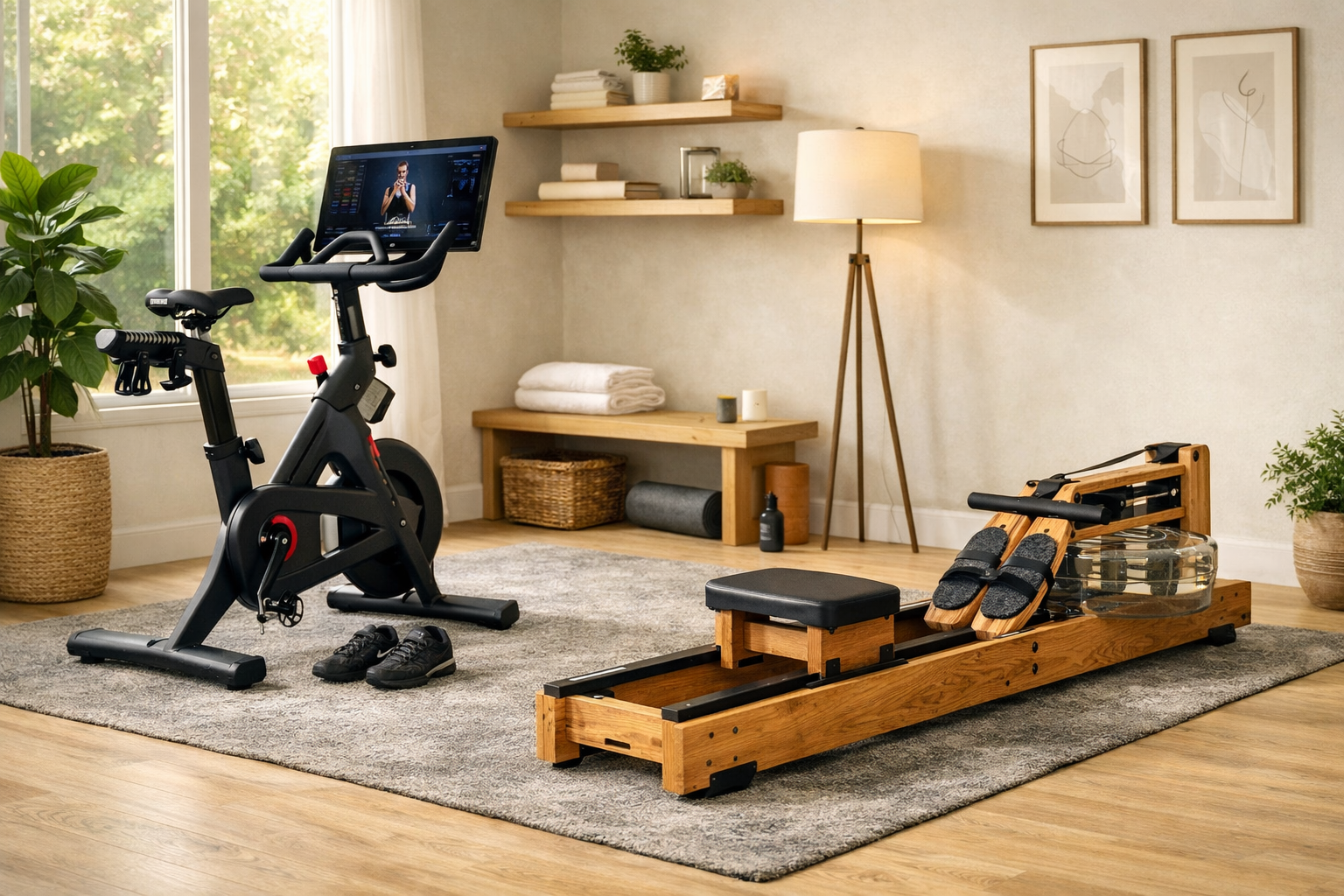
So I headed downstairs, clipped into the Peloton, and loaded up the 10 km Pūpūkea Forest Ride.
There is something satisfying about starting the day with movement before the rest of the world begins making demands on your time. No emails. No meetings. No competing priorities. Just the steady rhythm of the pedals turning beneath you.
The ride itself wasn't about chasing records or testing limits. It was about adding another brick to the wall. Twenty-four minutes of effort, just over six miles covered, and another reminder that momentum is built through repetition rather than heroics.
The rest of the day unfolded much as expected, balancing work commitments with the usual stream of emerging tasks that seem determined to fill every available gap in the schedule. By the evening, I was ready for something slower.
That's where Men Walking and Talking came in.
A 2.3-mile walk around Dorchester may not look particularly impressive when measured against training plans and mileage targets, but that's missing the point entirely. The value isn't found in the distance covered. It's found in the conversations shared along the way.
Running, cycling, and gym sessions all place demands on the body. Walking with good people places demands on nothing at all. It creates space to think, reflect, listen, and reconnect.
One of the themes emerging from this rebuild is that not all progress is physical. Fitness matters, of course, but so do wellbeing, balance, and maintaining connections with the people around us.
By the end of the day, I had managed both.
A training session completed before sunrise and a walk amongst friends before sunset.
Nothing spectacular.
Just another day of keeping the wheel turning.
And right now, that's exactly how momentum is built.
Wednesday
Wednesday was supposed to be a run.
The kit was ready. The session was planned. The intention was there.
Unfortunately, work had other ideas.
Some days are predictable. Others arrive with a list of problems that seem to multiply with every meeting, email, and phone call. Wednesday fell firmly into the second category. What began as a manageable workload quickly turned into a day of competing priorities, urgent requests, and the kind of pressure that demands your full attention.
As the hours passed, the opportunity for a run slowly disappeared.
At first, I told myself I'd go later. Then a little later than that. Eventually, it became clear that the session wasn't going to happen.
A few weeks ago, I would probably have viewed that as failure.
Now, I'm trying to see it differently.
One missed run doesn't undo the work that's already been done. It doesn't erase the miles already banked, the habits being built, or the progress that is quietly accumulating in the background. Life will occasionally get in the way. The real challenge isn't avoiding every disruption. It's making sure that one missed session doesn't become two, and two don't become a week.
The irony is that the very reason I'm rebuilding my fitness is to better manage periods like this. Training improves endurance, but not just the physical kind. It builds resilience, discipline, and the ability to cope when life becomes demanding.
Wednesday became a reminder that training exists to support life, not compete with it.
By the end of the day, I was mentally exhausted and more than ready for bed. No run, no miles recorded, and no training photos for Strava.
Just a hard day at work.
And sometimes, that's enough.
The important thing isn't what happened on Wednesday.
It's what happens on Thursday.
Thursday
Thursday was supposed to be a rowing day.
That was the plan, anyway.
But after missing Wednesday's run, I found myself thinking about it throughout the day. Not in a guilty way, more as a reminder that momentum is easier to maintain than it is to rebuild. The rowing session could wait. The run couldn't.
So I laced up my trainers and headed out for a planned 5km around the village.
The objective was simple: get the run done and keep the week moving forward.
What happened next was unexpected.
From the first few minutes, everything felt comfortable. Breathing was controlled, the legs felt strong, and for once I wasn't counting down the distance to the next walk break. As the route rolled through the village and towards the familiar hills, I made a decision that would have seemed unlikely only a few weeks ago.
I kept running.
The hills that had previously forced me into a walk felt different this time. Still challenging, still demanding respect, but no longer impossible. Instead of slowing to a walk, I found myself maintaining a steady effort and grinding my way to the top.
That was the moment I knew something had changed.
The rebuild is working.
The watch eventually confirmed it. A personal best.
Not by a few seconds.
Not by half a minute.
By one minute and thirty seconds.
On paper, that's a huge improvement. Large enough, in fact, to make me question some assumptions I've been carrying around. For months I've often justified walking sections of hills to save energy and preserve my pace. Yet this run suggests that perhaps the time penalty of maintaining a steady run is far less than I imagined.
It raises an interesting question.
Am I better off running those hills, or should I start learning the art of power walking properly?
Every experienced ultra runner seems to have an opinion on the subject. The smarter athletes know when to run and when to walk. They understand that the aim isn't to win a hill, it's to complete the distance as efficiently as possible.
Perhaps that's the next lesson waiting to be learned.
For now, though, the statistics matter less than the feeling.
A few weeks ago, a continuous 5km with the hills included would have felt ambitious.
This week it felt achievable.
The pace is improving. The confidence is growing. The momentum is building.
And for the first time in a long while, I can see a PB before I can see the finish line.
Friday
Thursday evening ended with a drive west into the Brecon Beacons.
Not for training this time, but to help marshal the Beacon Way Trail Ultra Marathon. There is something special about being involved in an ultra event, even when you're not running it. You get to witness the determination, preparation, and sheer stubbornness that these events demand. Every runner standing on that start line is carrying their own story, their own reason for being there.
After a late arrival and a shorter night's sleep than ideal, the alarm sounded before dawn.
For reasons that still don't make much sense, getting out of bed in a warm hotel room is far harder than getting out of bed at home at 4am. Yet somehow I managed it.
The destination was Sugar Loaf Mountain.
Headtorch on, shoes laced, and off into the darkness.
There is a unique feeling that comes with climbing a mountain before sunrise. The world is quiet. The only sounds are your breathing, your footsteps, and occasionally the wind moving through the landscape. There are no emails waiting, no deadlines demanding attention, and no distractions competing for your focus.
Only the simple objective of reaching the summit.
As I climbed, the first signs of daylight began to appear on the horizon. The darkness slowly softened into shades of blue and orange, revealing more of the landscape with every step.
When I reached the top, I discovered something increasingly rare.
I had the summit entirely to myself.
No crowds.
No conversations.
No phones being held aloft for social media.
Just me, the mountain, and the sunrise.
Moments like that remind me why trail running holds such a powerful grip on so many people. We often talk about pace, distance, elevation, training plans, and race goals. Those things matter, but they're not the reason most of us keep coming back.
The real reward is something much harder to measure.
It's the sense of perspective that comes from standing above the clouds as the day begins. It's the feeling of being small within a landscape that has existed for thousands of years before you arrived and will remain long after you've gone. It's the chance to disconnect from the noise of everyday life and reconnect with something simpler.
This, for me, is the spiritual side of trail running.
Not chasing times.
Not chasing medals.
Not even chasing fitness.
Just being present in a place beautiful enough to make you stop thinking about everything else.
The sunrise over Sugar Loaf lasted only a few minutes.
The feeling it created will last a lot longer.
Saturday
Saturday wasn't an endurance day in the conventional sense.
There were no running shoes, no carefully planned route, and no miles recorded on Strava.
But make no mistake, it was an endurance test all the same.
The alarm sounded at 03:30, a time usually reserved for airport departures or poor life choices. This time it was neither. The Beacon Way Trail Ultra Marathon was underway, and the day ahead would be spent helping to keep the event moving.
My role shifted throughout the day. Start line trackers, checkpoint duties at CP2 and CP3, supporting runners, monitoring progress, solving problems as they appeared, and doing whatever was needed to help the event run smoothly.
As the hours passed, I gained a renewed appreciation for what happens behind the scenes at ultra events. When you're racing, it's easy to focus purely on your own challenge. When you're marshalling, you see the bigger picture.
You see runners at their strongest and their weakest.
You see people arriving at checkpoints full of confidence and others hanging on through pure determination. You see the emotional highs, the difficult lows, and the remarkable resilience that sits somewhere in between.
What struck me most was how many runners simply refused to quit.
Some were moving well. Others were battling fatigue, aching muscles, blisters, cramps, and the inevitable mental wars that begin during long events. Yet they kept moving forward.
One step.
Then another.
Then another.
By late evening, tiredness was beginning to creep in. By early morning, it had become something else entirely.
Sleep was reduced to a single 40-minute power nap, grabbed whenever the opportunity presented itself. The rest of the time was spent supporting the event, tracking progress, answering questions, and ensuring runners were where they needed to be.
Eventually, Sunday arrived.
Then the finishers.
Then the packing away.
Then the long process of returning equipment, dismantling checkpoints, and loading vehicles.
By the time everything was finished, it was around 09:30 on Sunday morning.
Over thirty hours after the alarm had first gone off.
Ultra running often gets described as a test of endurance, but this weekend reminded me that endurance takes many forms.
Sometimes endurance is running through the night.
Sometimes it's climbing another hill when every muscle is protesting.
And sometimes it's simply staying awake long enough to help others achieve their goals.
I didn't earn a medal.
I didn't log any miles.
But I left with something equally valuable.
A front-row seat to what persistence really looks like.
Sunday
By 9am, the last athletes passed through our checkpoint. They'd just missed the cut-off time, meaning their race would end there. It was tough to see, especially knowing how much effort had gone into getting that far. Still, 66 miles is no mean feat. That's a serious distance and an incredible achievement in its own right.
With the final checkpoint duties complete, base was packed up and the focus shifted to something we'd all been craving: sleep.
I crawled into Poppy the camper, closed my eyes and... boff. Out for the count.
Four hours later, I woke up.
The original plan had been to get a run in before heading home, but that idea was quickly abandoned. The body had other ideas, and to be honest, it was the right call. It was time to hit the road.
The journey home wasn't exactly straightforward. Five hours of bunny-hopping between roads and service areas, fuelled by caffeine, snacks and sheer determination, eventually got me back through the front door. It was a tough drive. Not because of traffic or weather, but because the weekend was finally catching up with me.
Yet it was also a reflective drive.
As the miles rolled by, I found myself replaying the weekend in my head. The highs, the lows, the laughs, the challenges and all the moments in between. Events like these have a funny way of giving you space to think. Once the noise dies down and the job is done, you're left alone with your thoughts.
There are plenty of those thoughts, and I'll share more of them in the Honest Bits section. For now, though, I'm simply grateful. Grateful to have been part of something special, grateful for everyone who took on the challenge, and grateful to have made it home safely.
The event was over.
The road home was complete.
And, if I'm honest, a proper bed had never felt so good.

The Honest Bits
The drive to the Brecons went exactly to plan. I'd set myself a simple rule: drive for an hour and a half, stop for half an hour, then repeat. It worked brilliantly. No rushing, no fatigue, just steady progress towards the mountains. The only thing I'd do differently next time is be better prepared for those stops. A little more planning would have made them far more effective.
Case in point: the Burger King I had for tea.
It tasted good at the time, but if I'm being honest, it was a waste of money and probably not the best fuel for the weekend ahead. It's another reminder that I need to make more intelligent choices when it comes to food. Convenience is easy. Good nutrition takes thought and preparation.
Thursday night, however, was perfection.
Pulling up and watching the sun disappear over the valley was one of those moments that stays with you. The Brecons have a way of making you feel very small in the grand scheme of things. There was something deeply spiritual about sitting there in the fading light with no distractions and nowhere else I needed to be.
Then Friday morning somehow topped it.
An early rise, an early run, and a climb to the top of the mountain. I had the place entirely to myself. Standing there, watching the sunrise break across the landscape, was simply stunning. No headphones. No social media. No noise. Just nature putting on a display that no screen could ever compete with.
The event itself was equally rewarding.
It was great catching up with fellow marshals and athletes as they prepared for their 100-mile & 100km challenge. There is always a unique atmosphere around ultra-running events. Everyone knows the challenge ahead. Everyone knows it's going to hurt. Yet everyone turns up smiling and ready to give it a go.
Sleep, however, was in short supply.
A 3:30am alarm for a 6:00am race start meant that rest was almost non-existent. Throughout the day my food choices were poor and my fluid intake wasn't much better. This is definitely an area that needs attention.
Perhaps a thermos flask full of hot water would make coffee easier throughout the day. Healthier snacks would help maintain energy levels and provide better nutritional value. If I'm honest, I approached nutrition reactively rather than proactively.
Despite operating on almost no sleep for close to 30 hours, the event itself passed without any major issues. For that, I'm grateful.
The drive home was another story.
It was hard.
Really hard.
This was one of those times where I needed my "monkey mind" to help me out. Normally I'm trying to quiet it down, but on long solo drives it can serve a purpose. It becomes a distraction, something to occupy the brain while the miles tick by.
The first part of that internal conversation centred around running.
Spending a weekend around athletes tackling 100 miles & 100 km is incredibly motivating. Watching ordinary people achieve extraordinary things makes you question your own limits.
By the end of the drive, one thought was firmly planted in my mind:
I want to stand on the start line of the Wales 50 next year.
Will it be tough?
Absolutely.
By then I'll only have been running for just over two years.
But the goal excites me.
I want to join what feels like the 0.01% club. Not because of medals or recognition, but because of what it represents. Commitment. Discipline. Growth. The willingness to attempt something that most people would never even consider.
So how do I get there?
Diet
This is probably the easiest area to improve.
Less processed food.
More informed and healthier choices.
I've started thinking of my body as a human computer.
Data in = Data out.
Good food and nutrition in.
Better energy, recovery and stamina out.
It's a simple concept, but one I need to apply more consistently.
Training
I want to get back to my old habit of a "half marathon before breakfast."
Not because it's impressive, but because it built consistency.
Get up.
Get out.
Get it done.
The question I haven't answered yet is whether I should focus primarily on trail running, road running or a mixture of both. Given the Wales 50 is a trail event, the answer is probably somewhere in the middle. Road running builds fitness. Trail running builds resilience. I'll need both.
Mental Wellness
This might be the most important area of all.
Recently, my diverticulitis has flared up, and if I'm honest, stress has undoubtedly played a part.
Not necessary stress.
Unnecessary stress.
The kind created when people inflate egos, make lots of noise and try to appear impressive. Too often, the people actually doing the work end up carrying the consequences of those outbursts.
One of the pictures on my desk says:
"Control what is in your control and don't worry about what is outside your control."
I need to live that message more often.
Work should stay at work.
My health deserves better than carrying problems home with me.
I'm also beginning to realise that doom-scrolling before bed isn't helping either. Endless news feeds, endless opinions, endless noise. None of it leaves me feeling better.
What does?
Reading.
I've started a book recently, and I need to finish it. After that, I have another six books lined up and waiting. There is something far healthier about ending the day with a book than a glowing screen.
And then there is nature.
I need more forest bathing.
More walking.
More stopping.
More appreciation.
More moments spent noticing the world rather than rushing through it.
Looking Forward
Overall, this weekend gave me far more than I expected.
Yes, there was fatigue.
Yes, there were mistakes.
Yes, there are lessons to learn.
But there was also inspiration, clarity and a renewed sense of direction.
The road to the Wales 50 starts now.
It's going to require better nutrition, smarter training and improved mental wellbeing. There will be setbacks, doubts and difficult days along the way.
But that's all part of the journey.
And honestly?
It's a journey I'm genuinely excited about.

Lesson of the Week
If there was one lesson that stood out above all others this week, it's this:
Success isn't built on the big days. It's built on the ordinary ones.
The sunrise on Sugar Loaf was incredible. Watching runners push through 100 miles & 100 km was inspiring. Setting a new 5km personal best was rewarding.
But none of those moments happened in isolation.
They were all built upon hundreds of small decisions made when nobody was watching.
Getting out of bed when I'd rather stay warm.
Completing a strength session I didn't particularly want to do.
Choosing to train before work.
Showing up after a difficult day.
Being present for others at the event.
The older I get, the more I realise that discipline is far less glamorous than motivation. Motivation arrives when it feels like it. Discipline turns up regardless.
The weekend also reinforced another important truth:
Your body keeps score.
Poor food choices, poor hydration and lack of sleep eventually collect their debt. I got away with it this weekend, but that's not a sustainable strategy if I want to achieve bigger goals. The Wales 50 won't be completed on determination alone. It will be completed through preparation, consistency and looking after the machine that's expected to carry me there.
The athletes I watched this weekend demonstrated something remarkable. None of them looked superhuman. They looked like ordinary people who had committed themselves to an extraordinary challenge.
Perhaps that's the biggest lesson of all.
The gap between where I am and where I want to be isn't talent.
It's consistency.
One healthy meal.
One early morning run.
One strength session.
One chapter of a book instead of thirty minutes of doom-scrolling.
One walk in the woods.
One choice at a time.
The Wales 50 feels like a huge mountain from where I'm standing today.
Then again, so did some of the hills I ran this week.
And yet somehow, I made it to the top.
So the focus for the week ahead is simple:
Control what I can control. Fuel the body properly. Train consistently. Protect my mental wellbeing. Keep moving forward.
Because great achievements rarely happen all at once.
They happen one ordinary day at a time.
